In the first hard frost usually arrives somewhere between early and late October, and that is almost always the week the phones start ringing. Five simple checks in early autumn, finished off with a professional boiler service from Priority Comfort, catch most of the failures that turn into a 9 p.m. no-heat call in January. None of them take more than twenty minutes, and four of the five cost nothing.
Heating equipment fails on the first cold night for a predictable reason: it has been sitting idle since spring. Seals dry out, pressure drifts, sediment settles, and a pilot or igniter that was marginal months ago finally gives up under load.
1. Run the Heat for Twenty Minutes on a Mild Day
Pick a 50-degree morning and push the thermostat up until the system fires. You want a full cycle, start to finish, while the weather is still forgiving enough that a failure is an inconvenience instead of an emergency.
Stand near the unit and pay attention to what you hear and smell. A faint burnt-dust odor for the first ten minutes is normal. These are not:
- Banging or kettling from inside the boiler, which usually points to scale buildup on the heat exchanger
- Gurgling radiators, a sign of trapped air in the loop
- A grinding or whining circulator pump, often the bearings going
- Short cycling, where the burner fires and shuts off every two or three minutes
- A gas smell, which means shut the system down and call the utility first
Write down whatever you notice. Handing a technician a specific symptom shortens the diagnostic time and usually the bill with it.
2. Read the Pressure Gauge and Bleed Your Radiators
Most residential hot water boilers should read between 12 and 15 psi when cold and no higher than about 20 to 22 psi at full operating temperature. A gauge sitting at 8 psi means the upper floors will never heat properly; a gauge pinned near 30 is pushing the relief valve toward a discharge.
Low pressure plus cold radiator tops almost always means air in the system. Bleeding is a homeowner-level job: open the bleed valve on each radiator with a key or flathead, hold a cup underneath, and close it as soon as steady water replaces the hiss of escaping air.
Start with the radiator closest to the boiler and work outward, finishing on the top floor. If pressure keeps dropping week after week, you have a leak somewhere in the piping or a failing expansion tank, and that is a repair worth addressing before deep winter sets in.
3. Clear the Flue, Intake and Everything Within Three Feet
Walk outside and look at the vent termination on the sidewall or the chimney cap. Over the summer, birds nest in flues, wasps build in intake pipes, and shrubs grow across clearances that were fine last spring.
High-efficiency condensing units vent through PVC, typically two side-by-side pipes, and a blocked intake will lock the unit out on a safety switch within minutes of firing. Indoors, clear a three-foot perimeter around the equipment: no paint cans, no laundry baskets, no stored boxes against the jacket.
Also check the condensate line on any condensing boiler or high-efficiency furnace. A clogged trap backs water into the unit and trips the float switch, and it is one of the single most common no-heat calls seen in late fall.
4. Test the Carbon Monoxide Alarms and Look at the Flame
Any fuel-burning appliance deserves a working CO alarm on every level of the house, replaced every 7 to 10 years depending on the manufacturer. Press the test button on each one, and replace batteries now instead of listening to the chirp at 3 a.m.
If you can safely see the burner flame, it should burn mostly blue and steady. Yellow, lazy or flickering flames point to incomplete combustion, which is both an efficiency problem and a safety one. The U.S. Consumer Product Safety Commission links hundreds of accidental CO deaths each year to fuel-burning heating equipment, and nearly all of them trace back to blocked venting or unserviced appliances.
Soot streaks above the access panel, rust flakes in the burner tray, or moisture on the flue pipe all warrant a professional look before the heating season gets serious.
5. Book the Annual Service Before the Schedule Fills
The best window for maintenance is the first few weeks of autumn. By late fall, most local heating companies are running emergency calls, and a routine appointment that would have taken four days to schedule in October takes weeks.
Typical boiler service cost runs $150 to $350 for a standard annual tune-up and combustion check, with oil-fired units at the higher end because the nozzle, filter and chamber all need attention. Many homeowners searching for boiler service near them end up paying a 50 to 100 percent emergency premium weeks later for the same work.
The U.S. Department of Energy notes that an annually maintained system holds its rated efficiency far better than a neglected one, and a few points of efficiency saves real money across a long winter.
What an Expert Actually Does During a Tune-Up
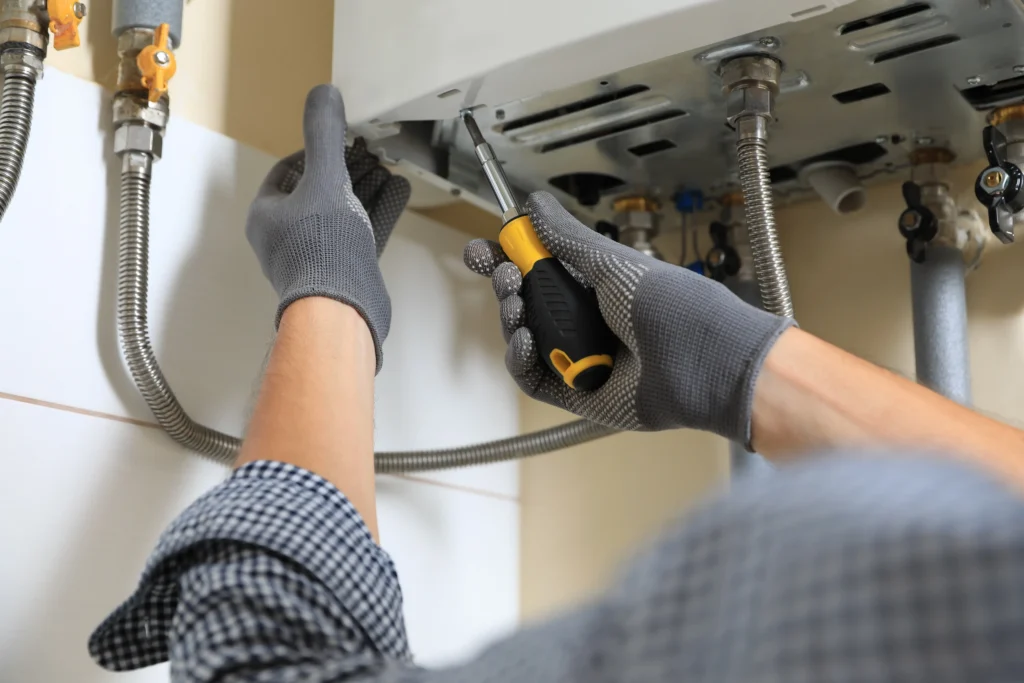
Homeowners often assume boiler services are a quick glance and an invoice. A proper visit from Priority Comfort takes 60 to 90 minutes and covers the parts you cannot reach:
- Combustion analysis with a meter, checking CO, oxygen and stack temperature against the manufacturer’s spec
- Cleaning the heat exchanger, burners and, on oil systems, the chamber and nozzle
- Testing the low-water cutoff, pressure relief valve and high-limit control
- Checking expansion tank charge and system pressure under load
- Inspecting the circulator, flue connections and gaskets for leaks or corrosion
- Flushing the condensate trap and verifying the safety switch
Ask for the combustion readings in writing. Year-over-year numbers tell you whether the unit is drifting, and they make the eventual repair-or-replace conversation a matter of data rather than guesswork.
Modern Alternatives for Efficiency & Comfort
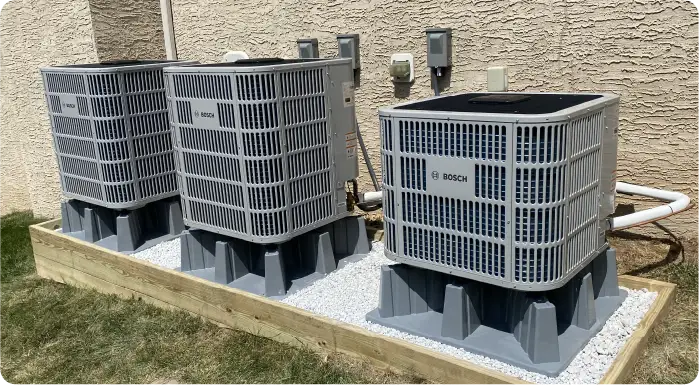
When older boilers begin to show their age, homeowners often explore updated system designs. For example, pairing existing radiant zones with a heat pump in Schwenksville offers an efficient way to manage shoulder-season heating while adding summer cooling.
If the equipment is under fifteen years old and the annual maintenance record is clean, repair is almost always the better call. Enrolling in a maintenance or service agreement with Priority Comfort, usually $180 to $300 a year, typically bundles the annual visit with priority scheduling and a discount on parts.
When a Repair Stops Making Financial Sense
A cast iron boiler can run 25 to 35 years, but the economics shift once you are past year 20 and facing a cracked section or a failed heat exchanger. A useful rule: if the boiler repair quote exceeds half the cost of new equipment and the unit is over fifteen years old, replacement usually wins.
Others evaluate their overall setup and find that a complete furnace installation in Schwenksville runs less than a full boiler swap if ductwork is already present.
Schedule Your Pre-Season Boiler Service
Early appointments fill quickly once overnight temperatures begin to drop. Contact Priority Comfort today to get on the schedule while the weather is still mild and turning on the heat is still optional.